Why Tennis Elbow Can Become Chronic — and How Shockwave Therapy May Help
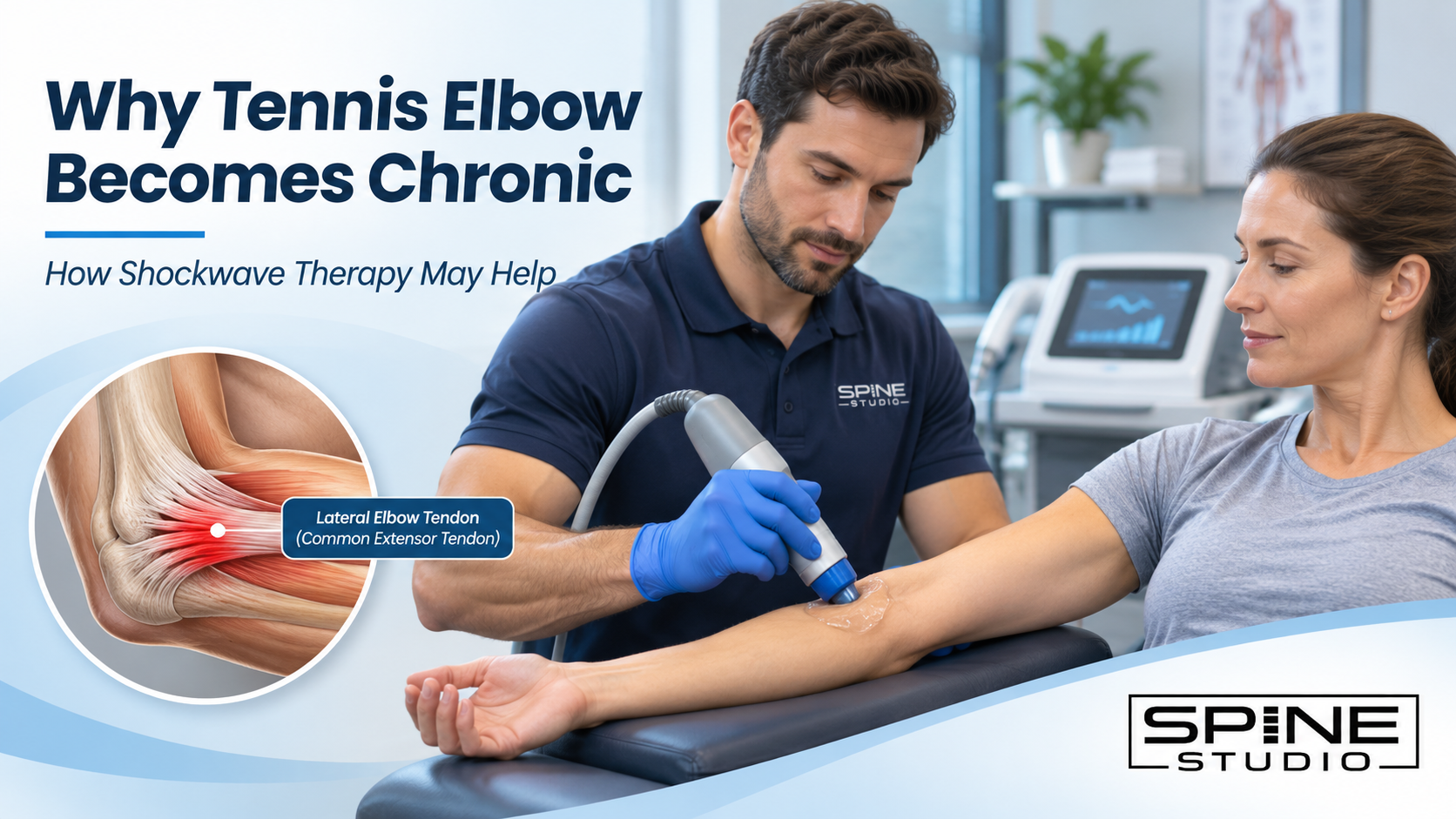
When tennis elbow becomes chronic, the problem may no longer be simply inflammation.
Repeated overload can lead to changes within the tendon itself. The tissue may become less organized and less capable of tolerating normal load.
That can create a frustrating cycle:
It hurts → you rest → it feels better → you use it again → the pain returns.
Early Treatment Options
For many people, conservative care is a good place to start. You may not need complete rest, but temporarily reducing repetitive gripping, lifting, or wrist extension can help calm the area down.
Gentle stretching and progressive forearm strengthening can improve the tendon’s ability to tolerate load again, while changing your grip, technique, equipment, or work habits may reduce the repeated stress that keeps irritating it.
In some cases, a counterforce brace or wrist brace may also help by reducing strain on the involved tendon during activity.
When Shockwave Therapy May Help
If symptoms continue despite doing the basics, Shockwave Therapy may be worth considering.
Shockwave delivers mechanical energy into the involved tissue with the goal of stimulating a biological healing response and supporting tissue remodeling.
Research continues to evolve, but several studies have found meaningful improvements in pain and function in people with chronic tennis elbow.
A 2024 systematic review comparing shockwave therapy with corticosteroid injections found that injections tended to provide better short-term relief at one month, while shockwave showed better pain and functional outcomes at three and six months.
A more recent network meta-analysis also found that both radial and focused shockwave can provide benefit, with different approaches performing better for different outcomes such as pain, grip strength, and function.
Focused or Radial Shockwave?
At Spine Studio, we have both.
Radial Shockwave is generally used over broader, more superficial areas.
Focused Shockwave can target a more specific area and reach deeper tissues.
Sometimes one approach is enough.
Other times, both may be useful.
The Bottom Line
Tennis elbow can become stubborn because chronic tendon problems may require more than simply resting until the pain settles down.
The goal is to:
- Reduce irritation.
- Restore strength.
- Improve tendon tolerance.
- Stimulate healing when needed.
If elbow pain has been lingering for weeks or months, it may be time to have it evaluated and determine whether Shockwave Therapy is a good fit.