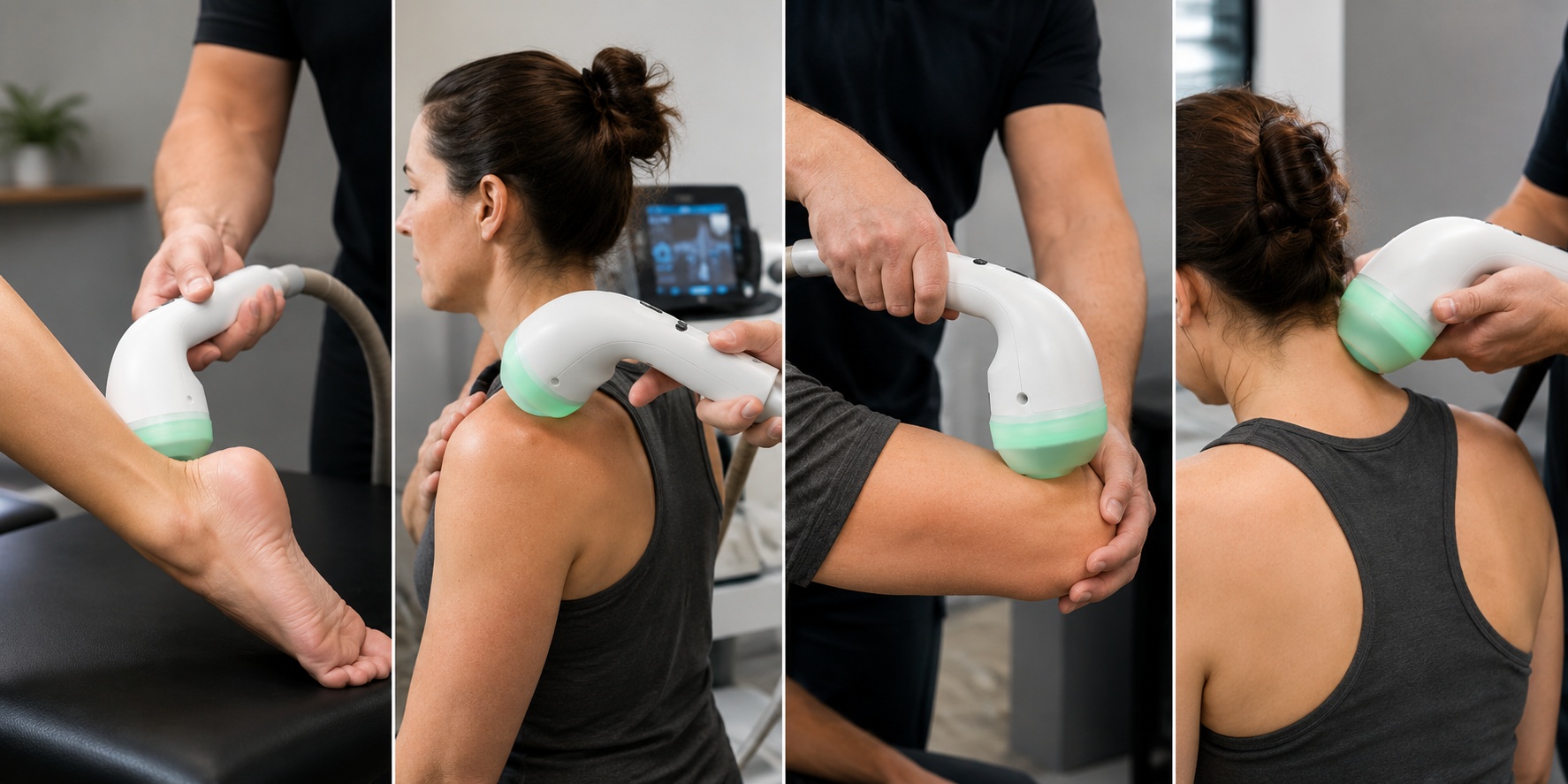
SHOCKWAVE THERAPY
Sometimes pain continues long after it should have been resolved.
When an area is repeatedly injured, overloaded, or unable to heal properly, circulation and normal muscle, ligament or joint repair can become impaired.
The result can be persistent pain, inflammation, scar tissue, calcification or stiffness.
Extracorporeal Shockwave Therapy (ESWT), typically called SHOCKWAVE THERAPY, is designed to stimulate the body's natural repair response and help these stubborn areas begin healing again.
HOW DOES SHOCKWAVE THERAPY WORK?
Despite its name, shockwave therapy does not use electrical shocks.
It delivers precisely controlled acoustic energy waves through the skin and into injured or painful tissue.
These waves create mechanical stimulation inside the tissue—a process known as mechanotransduction. In simple terms, the physical energy of the treatment sends signals to cells that can help activate biological processes involved in healing and tissue remodeling.
Shockwave therapy may help:
- Stimulate new blood-vessel formation and improve local circulation
- Activate cells involved in collagen production and tissue repair
- Break down certain calcifications and restrictive scar tissue
- Reduce pain and irritation
- Relax tight muscles and painful trigger points
- Support recovery from chronic or repetitive-use injuries
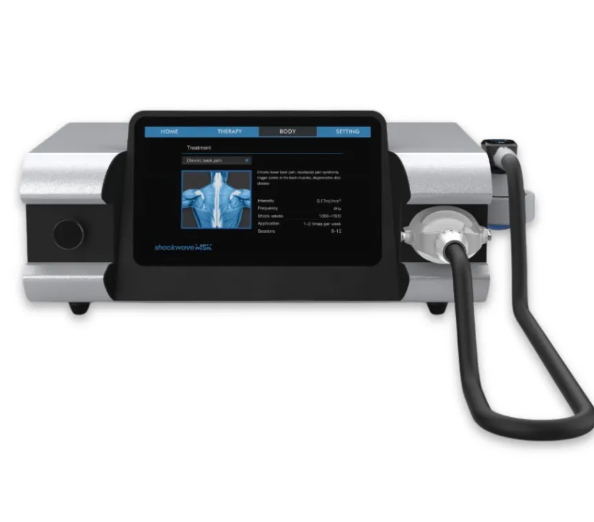
CAN IT HELP CHRONIC ISSUES?
Healthy connective tissue continually repairs and rebuilds itself.
But with chronic tendon and ligament problems, that normal repair process can become stalled. The tissue may receive inadequate circulation, collagen fibers may become disorganized, and the area can remain painful even months or years after the original injury.
Think of shockwave therapy as giving the area a controlled biological wake-up call.
Rather than simply covering up symptoms, the goal is to stimulate circulation and cellular activity so the body can begin remodeling and strengthening the involved tissue.
WHAT CONDITIONS MAY BENEFIT?
- Plantar fasciitis and heel pain
- Achilles tendon problems
- Tennis or golfer's elbow
- Shoulder and rotator-cuff conditions
- Calcific shoulder tendinopathy
- Patellar and other tendon problems
- Chronic muscle and myofascial pain
- Trigger points
- Hip and gluteal tendon pain
- Persistent sports and overuse injuries
- Selected joint and soft-tissue conditions
Not every painful condition requires shockwave therapy. Your doctor will evaluate your condition to determine whether you are an appropriate candidate.
WHAT DOES TREATMENT FEEL LIKE?
Treatment is performed by placing an applicator over the involved area and delivering a series of acoustic pulses into the tissue.
You may feel tapping, pulsing, pressure, or a temporary deep aching sensation, particularly over an injured area. The intensity can be adjusted based on your condition and comfort.
Treatments are generally brief and require no injections, medication, or surgery.
Because tissue remodeling occurs over time, shockwave therapy is typically performed as a series of treatments, with the number and frequency based on the condition being treated and your individual response.
THE GOAL:
Shockwave therapy isn't simply designed to temporarily numb pain.
The goal is to stimulate the biological processes involved in circulation, collagen remodeling, and tissue repair—helping your body address the underlying injured tissue and improve function over time.
Supporting Research Studies
Wang CJ, et al. Research demonstrating shockwave-induced neovascularization and increased angiogenic growth factors at the tendon-bone junction. Journal of Orthopaedic Research. 2003.
Gerdesmeyer L, Rompe JD, et al. Research evaluating extracorporeal shockwave therapy, cellular activity, tissue remodeling, and clinical outcomes. 2007.
Spinal Matrix / Endplate Studies. Experimental research evaluating low-energy extracorporeal shockwave therapy and its effects on vertebral endplate and intervertebral-disc degeneration. 2020–2021.
Individual results vary. Shockwave therapy is not appropriate for every patient or condition. A clinical evaluation is necessary to determine candidacy.