

SPINAL DECOMPRESSION FOR THE NECK AND LOWER BACK
A Gentle, Non-Surgical Approach for Disc & Nerve-Related Pain
When a lower back or neck spinal disc becomes compressed, bulged, herniated or injured, it can place stress on nearby nerves and contribute to back pain, sciatica, numbness, tingling, or pain traveling into the arms or legs.
Spinal decompression at Spine Studio in Keller / North Fort Worth is designed to gently reduce that pressure and create a better environment for irritated discs and nerves to recover.
HOW DOES SPINAL DECOMPRESSION WORK?
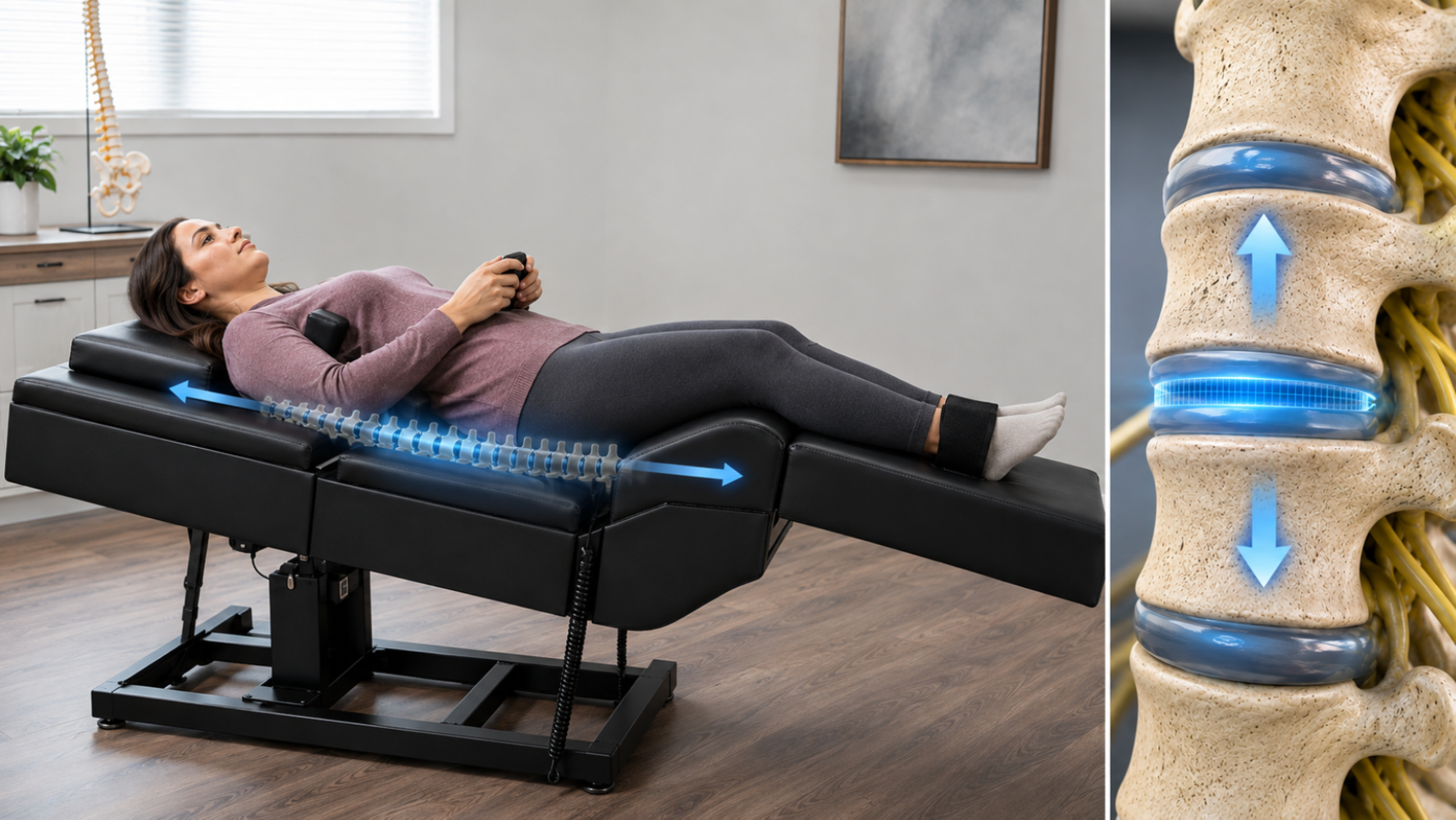
Think of a spinal disc somewhat like a compressed sponge. When it remains under constant pressure, its ability to move fluid and nutrients can be affected. This causes premature degenerative changes in the disc, and subsequent nerve pressure.
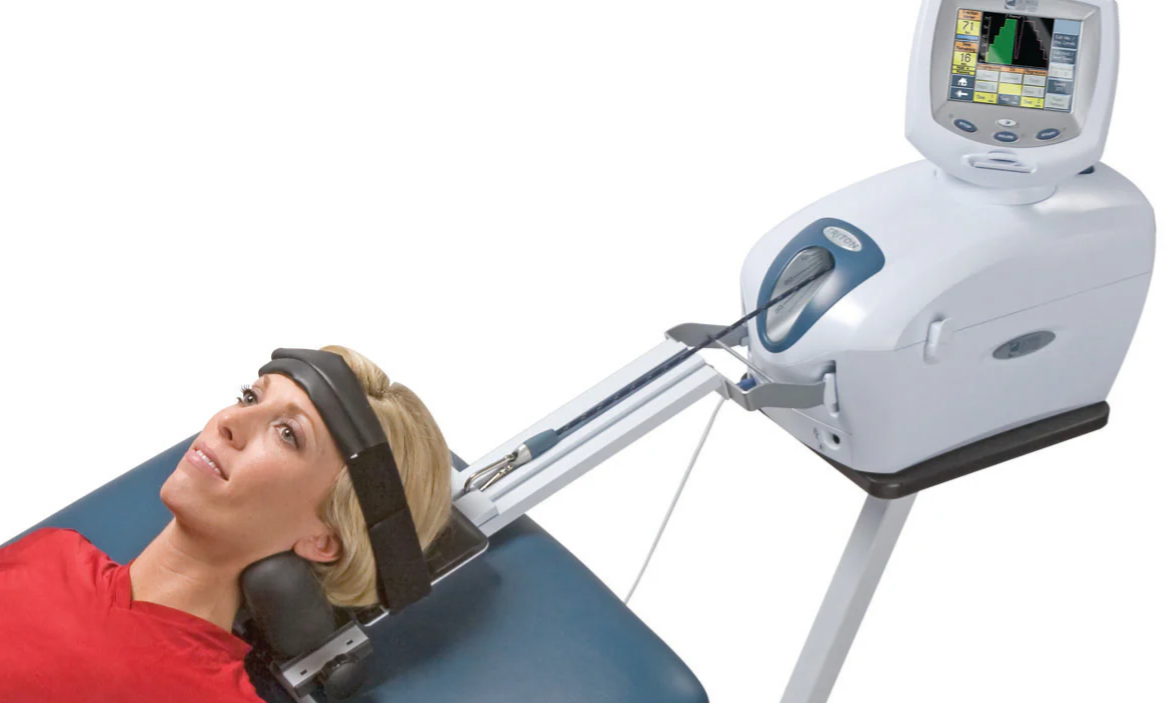
During spinal decompression, controlled pulling and relaxing forces are applied to the spine in repeated cycles. This gently unloads the targeted area rather than simply applying one continuous stretch.
The goal is to:
- Reduce pressure within and around the spinal discs
- Decrease stress on irritated or compressed nerves
- Promote movement of fluid and nutrients within the disc
- Reduce pain and muscle guarding
- Improve spinal movement and function
- Create conditions that can support the body's natural healing process
Research has demonstrated that spinal decompression can significantly change pressure inside the disc, including creating negative intradiscal pressure under certain treatment conditions.
WHO MAY BENEFIT?
Spinal decompression may be considered for people experiencing symptoms associated with:
- Bulging or herniated discs
- Sciatica or radiating leg pain
- Neck pain with arm symptoms
- Disc degeneration
- Chronic low-back pain
- Numbness or tingling related to nerve irritation
- Pain that becomes worse with prolonged sitting or spinal compression
Not every type of back or neck pain requires decompression. Your doctor will evaluate your condition to determine whether you are an appropriate candidate.
WHAT DOES TREATMENT FEEL LIKE?
Treatment is performed while you are comfortably positioned on a specialized decompression table. The amount and pattern of decompression are selected specifically for your condition.
Most patients describe the treatment as a gentle stretching or unloading sensation. Treatment is non-surgical and does not involve injections or medication.
Because disc and nerve conditions often develop over time, decompression is generally performed as a series of treatments rather than a single session. Your recommended treatment plan will depend upon your examination findings, symptoms, response to care, and individual goals. In most cases, think of spinal decompression as 'unwinding a pattern of disc compression forces.'
THE GOAL: Less Pressure and Better Movement
Spinal decompression services in Keller at Spine Studio are not simply about temporarily stretching the back. The goal is to address the mechanical pressure that may be contributing to disc and nerve irritation and give the involved tissues a better opportunity to recover.
Supporting Research Studies
Ramos G, Martin W. Effects of vertebral axial decompression on intradiscal pressure. Journal of Neurosurgery. 1994.
Choi J, et al. Randomized clinical study evaluating nonsurgical spinal decompression, pain improvement, and MRI-measured lumbar disc herniation volume. 2022.
Amjad F, et al. Randomized clinical trial evaluating nonsurgical spinal decompression combined with physical therapy for lumbar radiculopathy. BMC Musculoskeletal Disorders. 2022.
Vanti C, et al. Systematic review and meta-analysis evaluating mechanical traction for lumbar radiculopathy. 2021.
Individual results vary. Spinal decompression is not appropriate for every patient or spinal condition. A clinical evaluation is necessary to determine candidacy.