What is Shockwave Therapy?
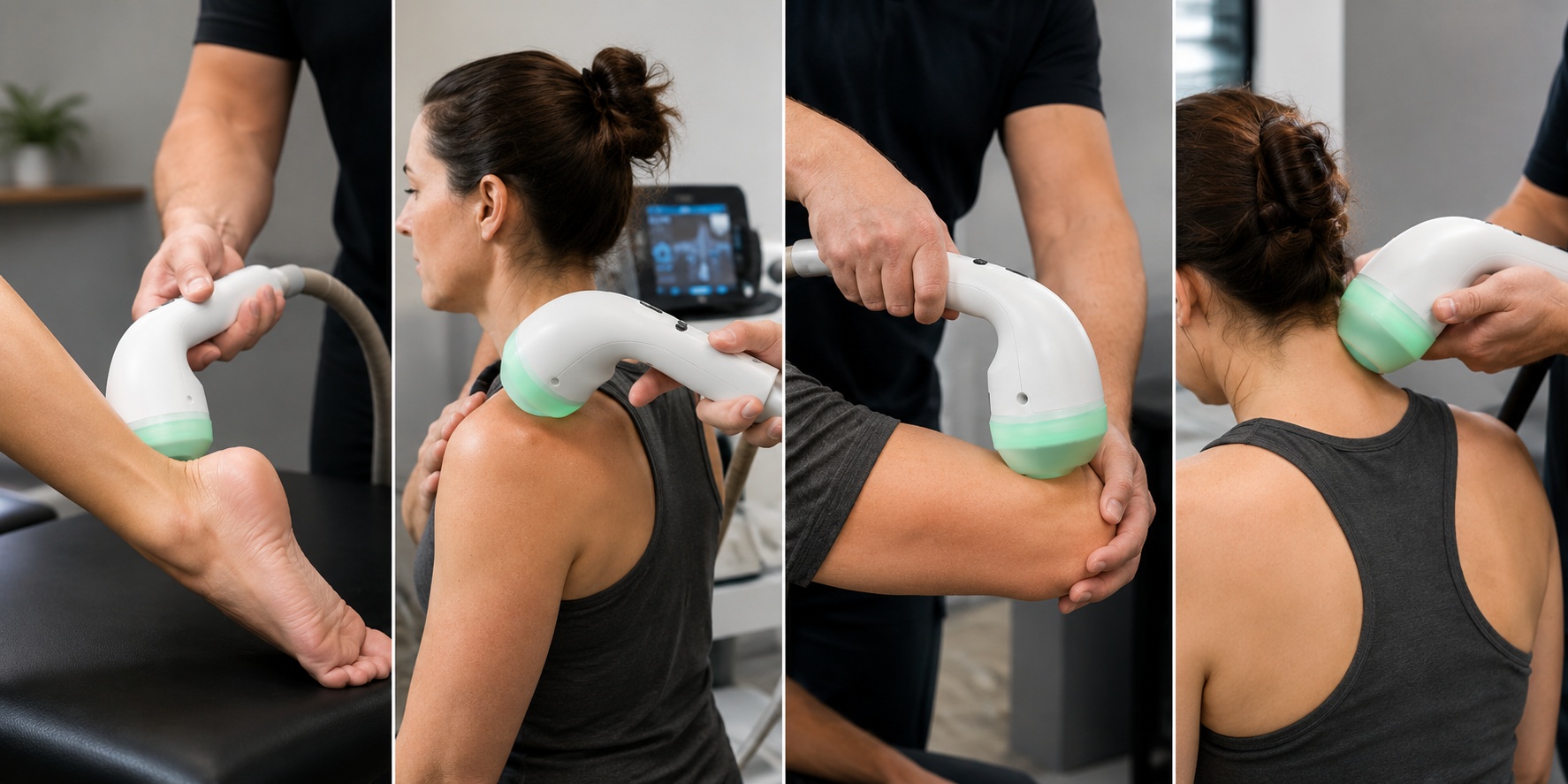
When an issue becomes chronic, the body often gets "stuck" in an incomplete healing cycle. Blood flow slows, inflammation lingers, and damaged tissue may not fully repair on its own.
Focused Shockwave Therapy uses precisely targeted acoustic waves to ‘wake up’ the body's natural healing response.
The treatment delivers controlled energy into the damaged or chronic tissue. Your cells recognize this gentle stimulus and begin a biological process called mechanotransduction, where shockwave energy is converted into healing signals.
Shockwave helps
- Improve blood flow to the injured area
- Stimulate new blood vessel formation (angiogenesis)
- Promote collagen production and tissue remodeling
- Recruit the body's natural repair cells
- Reduce chronic inflammation
- Decrease pain while improving function
Extracorporeal (meaning, outside the body) Shockwave Therapy delivers high-precision, deep-penetrating electromagnetic shockwaves to induce intracellular and extracellular biological reactions that support the healing and recovery of soft tissue.
Common Conditions Treated
· Chronic Back and Neck Pain
· Plantar Fasciitis & Heel Pain
· Tennis & Golfer's Elbow
· Rotator Cuff & Shoulder Problems
· Calcific Tendinitis
· Carpal Tunnel & De Quervain’s Syndromes
· Hip & Gluteal Tendon and Bursa Pain
· Knee Meniscus and Patellar Tendinitis
· Achilles Tendinitis & Shin Splints
· Muscle Strains & Trigger Points
· Chronic Soft-Tissue Conditions
· Select TMJ & Jaw Conditions
What to Expect
Treatment typically takes only 5–10 minutes and requires no surgery, injections, medication, or significant downtime. Most patients return to their normal daily activities immediately afterward. Because Shockwave Therapy works by stimulating the body's own repair processes, improvement often occurs gradually over the following days and weeks as the tissue responds and remodels.
Supporting Research Studies
Wang CJ, et al. Research demonstrating shockwave-induced neovascularization and increased angiogenic growth factors at the tendon-bone junction. Journal of Orthopaedic Research. 2003.
Gerdesmeyer L, Rompe JD, et al. Research evaluating extracorporeal shockwave therapy, cellular activity, tissue remodeling, and clinical outcomes. 2007.
Spinal Matrix / Endplate Studies. Experimental research evaluating low-energy extracorporeal shockwave therapy and its effects on vertebral endplate and intervertebral-disc degeneration. 2020–2021.
*Individual results vary. Shockwave therapy is not appropriate for every patient or condition. A clinical evaluation is necessary to determine candidacy.